On this page
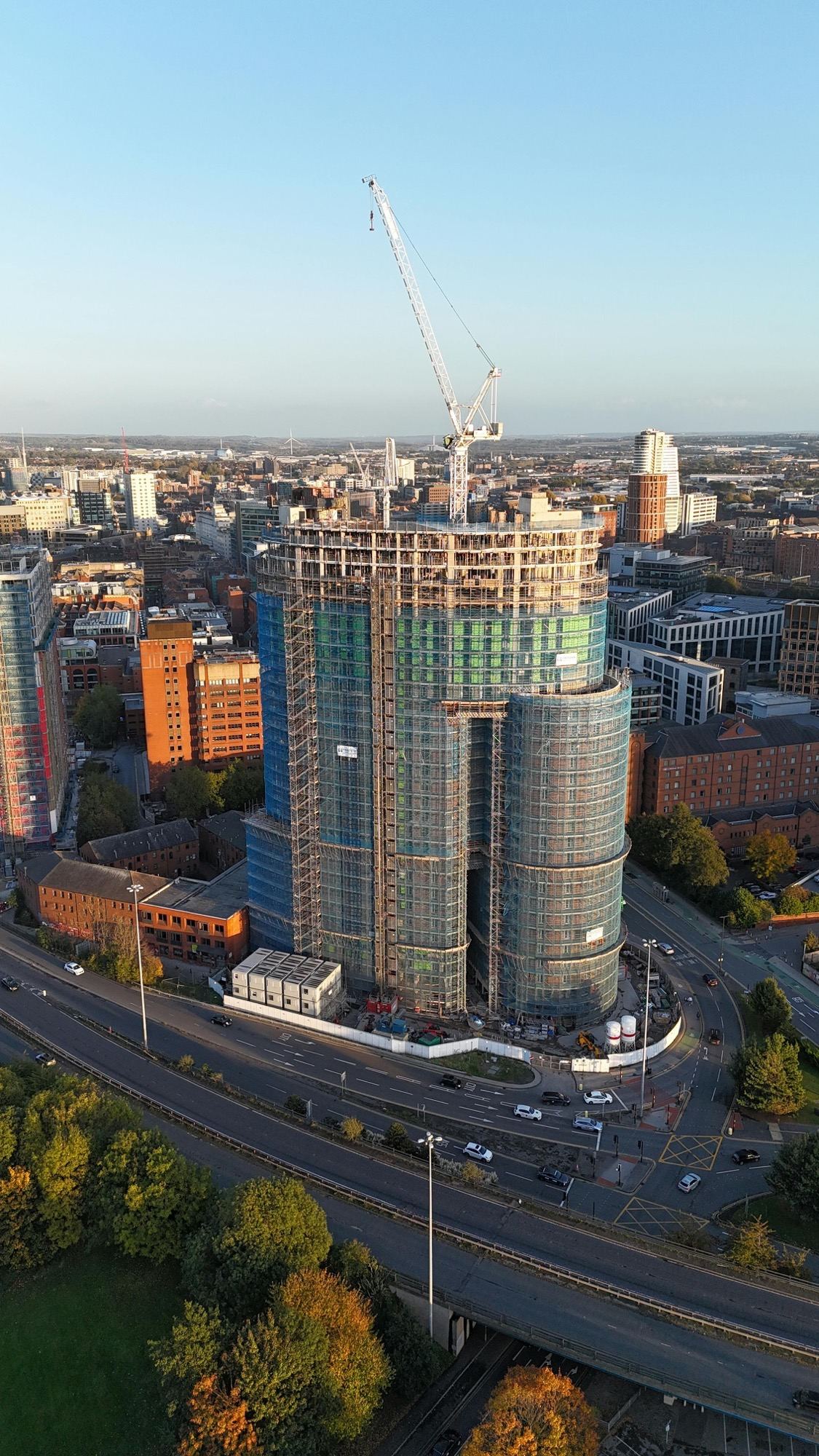
The main health and safety risks on high rise construction are falls from height, falling objects, lifting operations, fire and the congestion that comes from moving people and materials vertically. Each one repeats on every floor, so controls must move up the building with the work.
Falls from height
Falls from height remain the most common cause of fatal injuries in construction. On tall buildings the risk sits at every slab edge, lift shaft, stair void and riser. Controls include edge protection installed before the edge is exposed, protection screens, covered and fixed openings and a clear sequence for removing and reinstating protection. The Work at Height Regulations 2005 require work at height to be avoided where possible, then planned and supervised.
Falling objects
A dropped bolt from the twentieth floor can kill someone at street level. Exclusion zones, netting, fans, toe boards, tool tethering and loading bay controls protect workers below and the public at the hoarding line.
Lifting operations
Tower cranes, hoists and mast climbers move most of the materials on a tall building. Every lift needs planning under LOLER 1998, with lift plans, appointed persons, slinger signallers and wind limits respected. Crane bases and ties are temporary works, so coordination with the temporary works coordinator is essential. Read our guide to temporary works on high rise projects in Greater Manchester.
Fire during construction
Partly built towers can have open floors, combustible materials, hot works and limited escape routes. Fire plans must cover alarms, escape, firefighting access and control of hot works. They must be updated as the building rises. HSE guidance HSG168 sets out the expectations.
Vertical logistics and congestion
Hoist queues, crowded landings and late deliveries create pressure to cut corners. Logistics plans, delivery booking and clear floor management reduce that pressure.
Building Safety Act duties
Higher risk buildings in England have additional approval stages under the Building Safety Act 2022, including gateway applications to the Building Safety Regulator. Health and safety during construction is still governed by CDM 2015. Read our guide to the Building Safety Act 2022.
High rise support in Manchester and Liverpool
Matthews & Roberts provides high rise construction health and safety support for contractors in Manchester, Salford, Liverpool and across the North West, working alongside our temporary works coordinators.
Frequently asked questions
What is the biggest risk on a high rise construction site?
Falls from height remain the most common cause of fatal injuries in construction. High rise work repeats that risk at every floor edge, opening and riser. Falling objects and lifting operations follow closely.
What is a higher risk building?
In England, a higher risk building under the Building Safety Act 2022 is one at least 18 metres high or at least seven storeys with at least two residential units. These buildings have extra approval stages with the Building Safety Regulator.
Who manages fire risk during construction?
The Principal Contractor must plan and manage fire risk during the construction phase. HSE guidance HSG168 covers fire safety in construction.
Health and safety support
Related guides and templates
Choosing the right level of support starts with knowing what you need. These help.
Guides
- Do I Need a Health and Safety Consultant for Construction Work?Every employer must have competent health and safety help. Whether that means an in house manager or an external...
- What Health and Safety Rules Apply on a Housing Development Site?Housing sites change every week and bring the public close to live construction. Here are the rules that apply and...
- What Health and Safety Requirements Apply to Rail and Civil Engineering Projects?Rail and civil engineering projects combine CDM 2015 with asset owner rules, heavy plant and buried services. Here...
- Health and Safety on Live Industrial Sites in Cheshire, Widnes and RuncornConstruction on an operating industrial site means working inside the client's rules as well as your own. This guide...
Free templates
- Construction Site Safety Inspection ChecklistA structured weekly site safety inspection.Free · Word and PDF
- RAMS Review ChecklistCheck subcontractor RAMS before work starts.Free · Word and PDF
- Construction Health and Safety Audit ChecklistDocuments, site conditions and welfare with an action log.Free · Word and PDF
Need support with health & safety on your project?