Transport &
Highways
Highways · Roads · Structures · Rail · Live Networks
Matthews & Roberts supports transport and highway contractors across the UK with project, programme, commercial, safety and technical capability — from tender through mobilisation, live construction and handover.
Transport infrastructure has to be constructed while the network around it continues to move. Traffic, public access, utilities, structures, restricted windows and complex stakeholder interfaces all influence how contractors can deliver.
Highway and transport contractor support across the UK
Transport and highway projects rarely operate in isolation. Live traffic can run beside the workforce. Closures may only be available within limited windows. Existing utilities can sit directly inside the proposed works.
Structures, drainage, earthworks, surfacing, signals and road restraint systems all need to progress in sequence. And the project may need to satisfy multiple technical, contractual and stakeholder requirements before each phase can open.
Matthews & Roberts works alongside Principal Contractors, main contractors and specialist contractors delivering highways, roads, structures, rail and transport infrastructure — providing programme, commercial, safety, Temporary Works, quality and project controls across those interfaces.
Transport and highways — one consolidated sector
Transport programmes are shaped by what the network will and will not allow
Live Traffic Interfaces
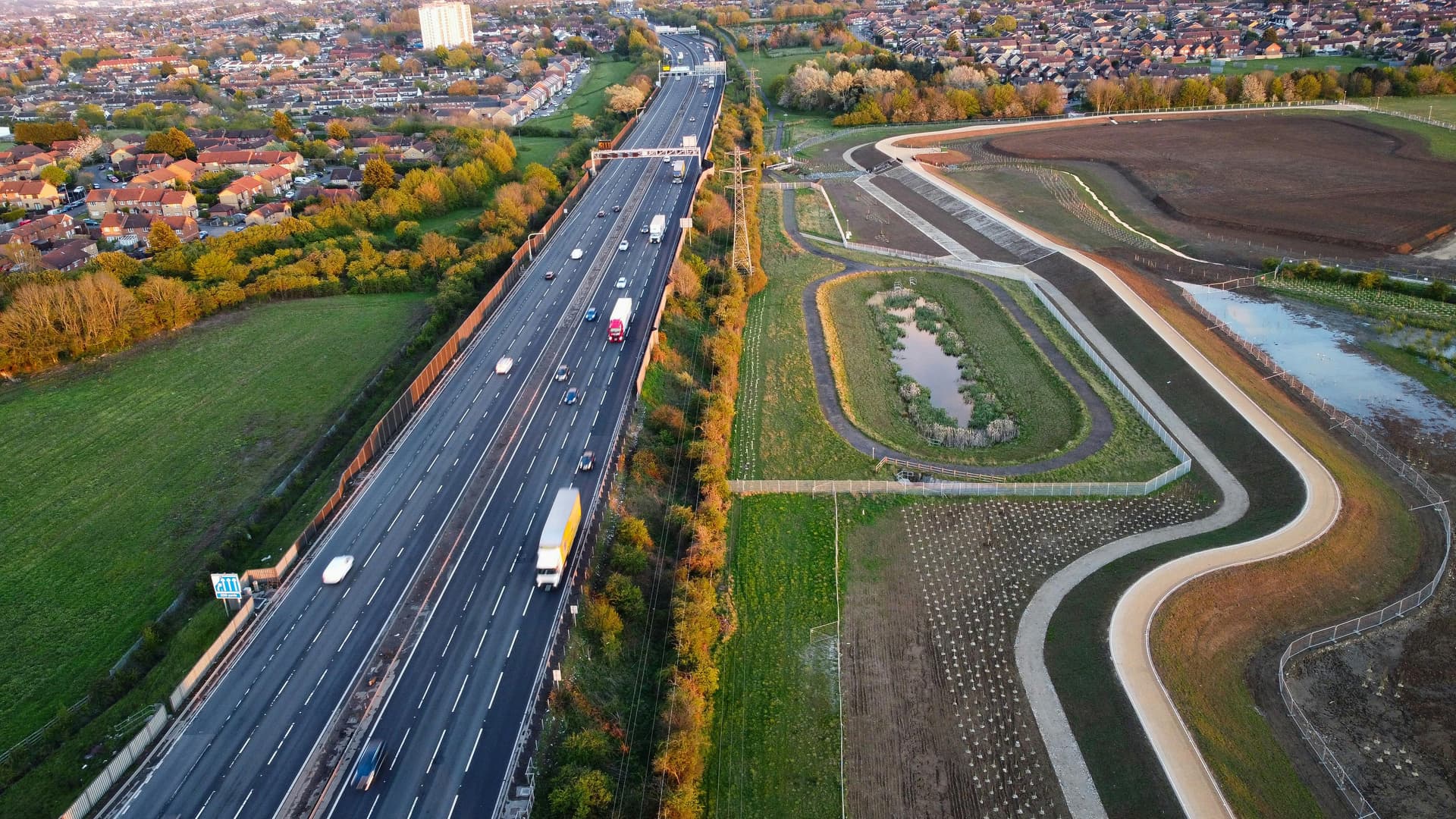
Construction often runs alongside live carriageways, requiring clear separation, phased working and coordination with temporary traffic management.
Restricted Working Windows
Night-only access, possession windows, lane-rental schemes and permit conditions can dictate when and how much construction can actually progress.
Utility Constraints
Existing buried services — gas, water, electricity, telecoms, drainage — are frequently one of the most significant constraints on highway programme and sequence.
Traffic Management Integration
Temporary layouts, lane closures, switches and closures need to be designed, approved, implemented and removed as an integrated part of the construction sequence.
Technical Approvals
Design approvals, departures, Road Safety Audit responses and highway-authority requirements need tracking and resolving before construction can progress.
Structures & Temporary Works
Bridge works, retaining structures and culverts bring lifting interfaces, Temporary Works and live-traffic sequencing that need coordinating with the wider programme.
Commercial Change
Utility strikes, unforeseen conditions, extended access windows and changed sequences can rapidly affect cost and programme through the contract.
Public Interfaces
Pedestrians, cyclists, residents and road users interface with construction throughout delivery, creating H&S, access and communication requirements.
Construction does not get exclusive use of the network
Highway and transport works are frequently delivered while parts of the surrounding network remain operational. The contractor may need to manage temporary layouts, public interfaces, restricted access, deliveries, plant movements and work areas within tightly controlled boundaries. Matthews & Roberts can support the project controls around those interfaces.
Traffic management is part of the construction sequence
Lane closures, traffic switches, temporary alignments, road closures and restricted working periods need to be integrated with the construction programme rather than treated as a separate activity. Matthews & Roberts can support contractors in coordinating traffic-management requirements, phasing and construction interfaces.
Specialist traffic-management design and Chapter 8 compliance remain with the appropriately competent appointed parties.
Deliver the approved highway works without losing control of programme
Sections 278 and 38 of the Highways Act 1980 are commonly used in England and Wales for development-related highway works. For contractors, the practical challenge is coordinating the approved design, utilities, inspections, programme, testing, defects and completion requirements with the relevant highway authority. The precise approval, bonding and adoption requirements depend on the highway authority and agreement in question.
Section 278 — works to existing highway
Junction improvements, new accesses and carriageway works funded under agreement with the highway authority, coordinating approved design, utilities, inspections, programme and completion.
Section 38 — adoptable new road construction
New road construction to adoptable standards with testing, defects liability and adoption coordinated alongside the broader development programme.
Buried services can control the highway programme
Existing utilities are frequently one of the most significant constraints on highway projects. Diversions, protection requirements, temporary services and new connections can affect excavation, drainage, structures, traffic management and construction sequence. Matthews & Roberts can support contractors in integrating utility interfaces into the programme, commercial controls and short-term planning.
Structural works create interfaces beyond the structure itself
Bridge works, retaining structures, culverts and other transport structures can involve significant Temporary Works, lifting, traffic management, access and sequencing requirements. Matthews & Roberts can support contractor teams in integrating those activities with the wider programme and project controls.
Temporary Works management follows BS 5975-1:2024 and, where relevant, BS 5975-2:2024 for falsework.
When access is measured in hours rather than weeks
Transport programmes often depend on restricted possessions, closures, traffic-management windows or night works. The programme therefore needs to integrate design, approvals, utilities, procurement, Temporary Works, traffic management, construction, inspections and reopening requirements around the available access.
Matthews & Roberts can support contractors with tender programmes, baselines, look-aheads, milestone tracking and recovery.
England has entered the third Road Investment Strategy period
Road Investment Strategy 3 covers the Strategic Road Network in England from April 2026 to March 2031, providing a long-term programme for operating, maintaining, renewing and improving motorways and major A-roads.
Matthews & Roberts does not imply endorsement by or approved supplier status with National Highways unless formally confirmed.
DMRB — technical requirements
The Design Manual for Roads and Bridges provides requirements and guidance across strategic highway infrastructure where contractually applicable. Applicability depends on the overseeing organisation, contract and road authority.
MCHW — September 2025 modernisation
National Highways published a modernised Manual of Contract Documents for Highway Works in September 2025, covering the Specification for Highway Works, Instructions for Specifiers and Method of Measurement.
RSA coordination and NEC contract management
Road Safety Audit may form part of the highway design and delivery process where required. Where National Highways DMRB applies, GG 119 is the relevant RSA standard. Matthews & Roberts can support coordination between project team, designer and the appropriately independent Road Safety Audit team — tracking responses, managing programme interfaces and maintaining records.
The audit team must retain independence from the design team. Not all schemes require all audit stages.
NEC contract support
NEC contracts are widely used across transport and highway infrastructure. Subject to specific contract and amendments — entitlement is not guaranteed.
Delivery where access and interfaces control the programme
Rail construction can involve restricted access, possessions, operational interfaces, specialist safety arrangements, Temporary Works and complex stakeholder requirements. Airport, port and transport-hub construction can combine public access, security, logistics, restricted working areas and live operational interfaces.
Rail safety certification, possession planning authority, PICOP, COSS, engineering-authority and equivalent roles remain with formally appointed competent parties. Specialist airside permits and port operational authority roles similarly remain with formally appointed parties.
Quality records need to progress with the road
Transport projects can generate significant inspection, test and completion evidence across earthworks, drainage, structures, pavement, restraint systems, utilities and specialist installations. ITPs, inspection records, NCRs, test results, defects and handover information need to develop alongside construction rather than being assembled retrospectively.
Transport & highways delivery services
Types of support we provide
Support around the infrastructure team you already have
Transport contractors do not always need permanent additional capability across every phase. Matthews & Roberts can provide targeted resource during tender, mobilisation, major traffic switches, restricted working periods, peak construction, programme recovery or project close-out.
Project-Specific
Around a defined transport or highway project.
Embedded
Alongside the contractor's delivery team.
Retained
Across tenders, mobilisations and live projects.
Critical interfaces need identifying before they reach site
Matthews & Roberts can support contractors during tender and pre-construction by reviewing delivery methodology, programme, traffic management phasing, utilities, Temporary Works, H&S arrangements and commercial requirements before mobilisation.
Tender & Pre-Construction SupportTransport & highways questions
Yes. Matthews & Roberts works alongside contractors delivering highways, roads, structures and wider transport infrastructure across the UK, providing project, programme, commercial, H&S, CDM, Temporary Works and quality support as required.
Yes. We can support the project controls around traffic interfaces, programme, phasing, access, H&S, utilities, Temporary Works and subcontractor coordination. Specialist traffic-management design and implementation remain with appropriately competent appointed parties.
Yes. We can support contractor teams delivering Section 278 works around programme, utilities, project controls, quality, commercial change and interfaces with approved designs and highway-authority requirements.
Yes. We can support contractors delivering adoptable-road works with programme, project controls, quality, utilities, defects and completion interfaces. The precise approval and adoption requirements depend on the relevant highway authority and agreement.
Yes. Matthews & Roberts can review design, utilities, access, procurement, Temporary Works, subcontractor and productivity constraints and help establish a structured programme-recovery plan.
Yes. Our Commercial & Contract Management service can support NEC contract review and administration processes including Early Warnings, Compensation Events, notices, programme interfaces and project records, subject to the specific contract and amendments.
Yes. Quantity Surveying support can include applications, measurement, variations, subcontract accounts, CVR, forecasting and final account across highway and transport construction.
Yes. We can provide TWC and Temporary Works support around excavations, working platforms, temporary structures, structural works, lifting interfaces and other project-specific Temporary Works.
The Design Manual for Roads and Bridges contains technical requirements and guidance for highway infrastructure where applicable. National Highways published a modernised Manual of Contract Documents for Highway Works in September 2025, using a streamlined structure covering the Specification for Highway Works, Instructions for Specifiers and Method of Measurement. Their applicability depends on the project, authority and contract.
Yes. Matthews & Roberts can support tender programme, methodology, access and phasing, utilities, Temporary Works, H&S, commercial review, quality and mobilisation planning.
Where the project falls within our capability, yes. Matthews & Roberts can provide project, programme, commercial, H&S and Temporary Works support around rail and rail-adjacent construction interfaces. Formal rail safety and possession duties remain with appropriately appointed competent parties.
Explore other sectors
Need additional capability around your next infrastructure project?
Whether you are tendering a highway scheme, mobilising works within live traffic, coordinating utilities and structures or recovering a programme against a restricted access window, Matthews & Roberts can strengthen the project, commercial, programme, safety and technical capability around your contractor team.
Prefer to speak to someone directly? We respond the same working day.
Go to contact page