Key facts
- Location
- Lake District, North West
- Our role
- Project Manager and Health & Safety Management
- Sector
- Housing & Residential
- Status
- Complete
- Dates
- June 2024 to March 2025
Overview
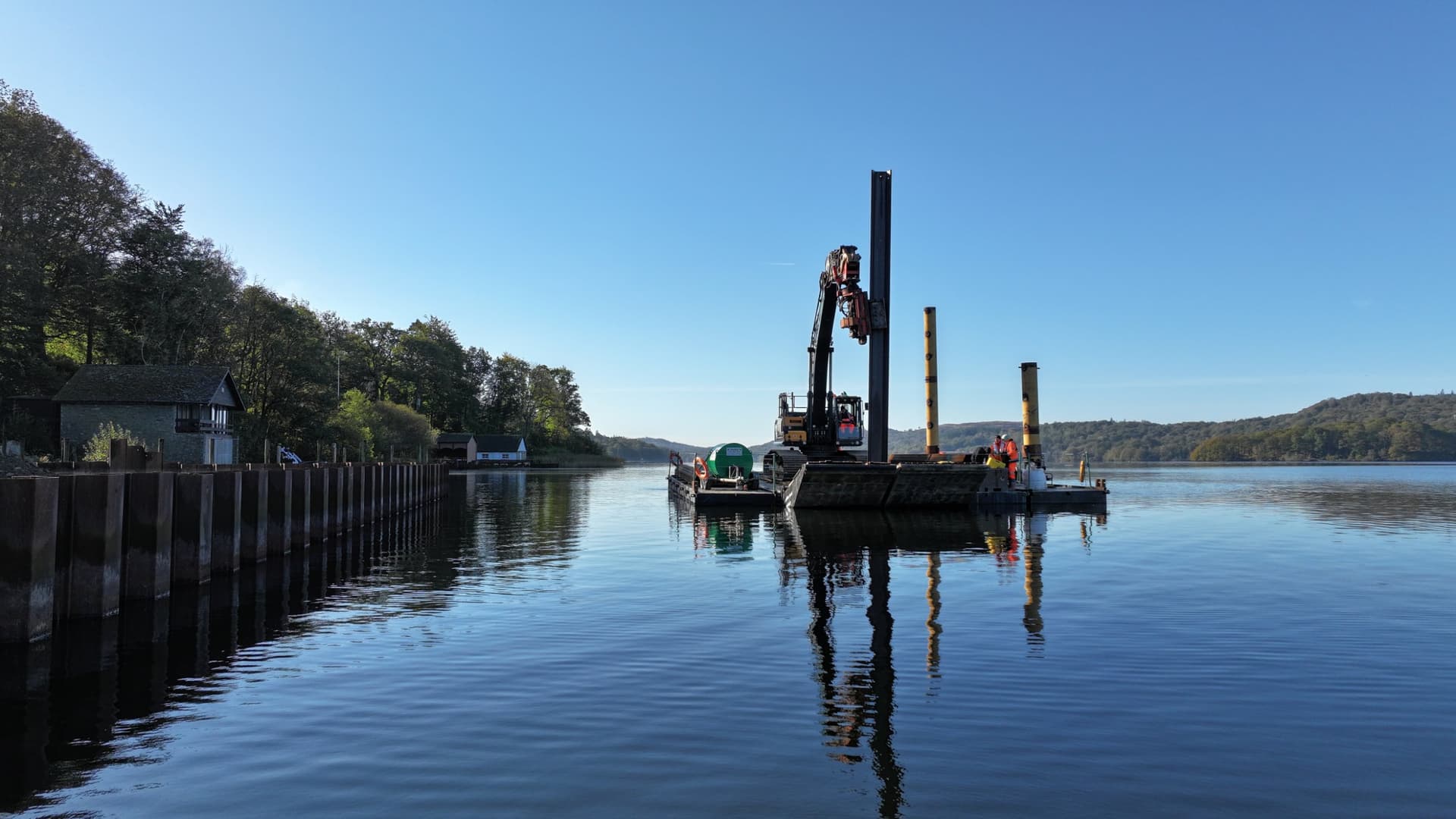
The Lakeside Development was a waterside construction project in the Lake District. The site sat alongside a lake, with an underground culvert running beneath the works and vehicle access restricted from the adjoining A road.
Matthews & Roberts was appointed as project manager from June 2024 through to completion in March 2025, with responsibility for health and safety management across the works. Work in water, a live culvert and constrained highway access made health and safety the defining challenge of the project.
Our Scope
Project management
We managed the programme, coordinated the design and contracting teams and maintained control of cost, quality and progress from mobilisation through to handover. Holding the project management role alongside health and safety meant every programme decision was tested against its safety implications before it was made.
Health and safety management
Health and safety was managed as an integral part of the project, not as a separate function. Every activity was planned, assessed and controlled before it started, with the controls reviewed as conditions on site changed.
Cofferdam works
Works within the lake required a temporary cofferdam to create a dry working area. We made sure the cofferdam was designed and checked as temporary works, installed to its approved design and inspected before any work took place inside it.
Water levels, seepage and the condition of the structure were monitored throughout. Lifejackets, rescue equipment and a water rescue plan were in place for all work at or near the water's edge. Clear trigger levels were set for withdrawing operatives if conditions changed.
Working with the river trust
Works affecting the lake and watercourse were agreed in advance with the river trust. We coordinated method statements, environmental controls and working windows with the trust. Pollution prevention, silt control and ecological protection measures were put in place before work began and maintained throughout.
Water ingress from the underground culvert
An underground culvert beneath the site created a persistent risk of water ingress into excavations and the working area. The culvert was investigated before works began so its route and condition were understood. Pumping arrangements, monitoring and contingency measures were put in place to control ingress, protect the stability of excavations and keep the working area safe.
Access restriction from the A road
Site access from the adjoining A road was restricted, limiting when and how vehicles could enter and leave. We developed a logistics plan with scheduled deliveries, controlled vehicle movements and trained banksmen at the site entrance. Traffic management was designed and implemented in line with Chapter 8 of the Traffic Signs Manual to protect road users, pedestrians and the site team.
Access and egress
Safe access and egress were planned for every area of the site. Pedestrian routes were defined and segregated from plant. Edge protection was installed along the water's edge and around excavations. Stair towers or ladders provided safe access into the cofferdam, with a clear means of emergency egress maintained at all times.
Site safety management
- Construction phase plan prepared and maintained in line with CDM 2015
- Review and approval of risk assessments and method statements before work started
- Site inductions covering the specific risks of working near water, the culvert and the site access
- Daily briefings and regular toolbox talks
- Permits to work for excavations, hot works and work near water
- Regular site inspections and audits with actions tracked to close out
- Emergency and water rescue plans, communicated to everyone on site
- COSHH assessments, including awareness of Weil's disease for anyone working in or near water
- Near miss and incident reporting with lessons shared across the team
- Welfare facilities maintained to the required standard throughout
Regulatory compliance
Matthews & Roberts ensured the works were planned and delivered in line with the relevant regulations and guidance, including:
- Health and Safety at Work etc. Act 1974
- Construction (Design and Management) Regulations 2015
- Management of Health and Safety at Work Regulations 1999
- Work at Height Regulations 2005
- Confined Spaces Regulations 1997
- Control of Substances Hazardous to Health Regulations 2002 (COSHH)
- Provision and Use of Work Equipment Regulations 1998 (PUWER)
- Lifting Operations and Lifting Equipment Regulations 1998 (LOLER)
- Reporting of Injuries, Diseases and Dangerous Occurrences Regulations 2013 (RIDDOR)
- Environmental Permitting (England and Wales) Regulations 2016
- BS 5975 Code of Practice for Temporary Works Procedures
- Chapter 8 of the Traffic Signs Manual
Approach
Planning before work starts
The highest risk activities on this project were predictable: work in water, water ingress from below and vehicle movements onto a busy road. We planned the controls for each before work began so the site team never had to improvise around a hazard.
Visible leadership on site
Health and safety standards were set and checked in person. Regular presence on site meant issues were raised early, conversations happened face to face and the standards expected were clear to every operative and subcontractor.
One integrated plan
Because project management and health and safety sat with the same team, safety decisions were made alongside programme and cost decisions rather than after them. Sequencing, logistics and resourcing were all built around safe working from the outset.
Outcome
The Lakeside Development was completed in March 2025. Matthews & Roberts delivered the project from June 2024 through to handover, managing the programme alongside a complex set of site risks through a single integrated approach.
Matthews & Roberts is based in Liverpool and provides project management and health and safety consultancy across the North West and the wider UK.
Frequently asked questions
What are the main health and safety risks when working near water?
The main risks are drowning, falls from height into water, sudden changes in water level and exposure to waterborne diseases such as Weil's disease. They are controlled through edge protection, lifejackets, rescue equipment, a water rescue plan and clear procedures for monitoring conditions.
What is a cofferdam?
A cofferdam is a temporary structure built within or alongside water to create a dry working area. It is temporary works and must be designed, checked, installed and inspected in line with BS 5975 before it is used.
Who is responsible for health and safety under CDM 2015?
CDM 2015 places duties on the client, the principal designer, the principal contractor, designers and contractors. Each has specific responsibilities for planning, managing and monitoring health and safety throughout the project.
How do you manage site access from a busy main road?
Through a logistics plan that controls when vehicles arrive, how they enter and leave and who guides them. Traffic management is designed in line with Chapter 8 of the Traffic Signs Manual, with deliveries scheduled to avoid peak traffic where possible.
Do you provide project management and health and safety support on waterside projects?
Yes. Matthews & Roberts provides project management and health and safety management on complex sites, including waterside works, across the North West and the wider UK.