
On this page
Class MA permitted development allows buildings in Commercial, Business and Service use (Class E) in England to change to residential use without a full planning application, subject to prior approval from the local planning authority. It is one of the main routes for giving underused shops, offices and commercial buildings a new life as homes.
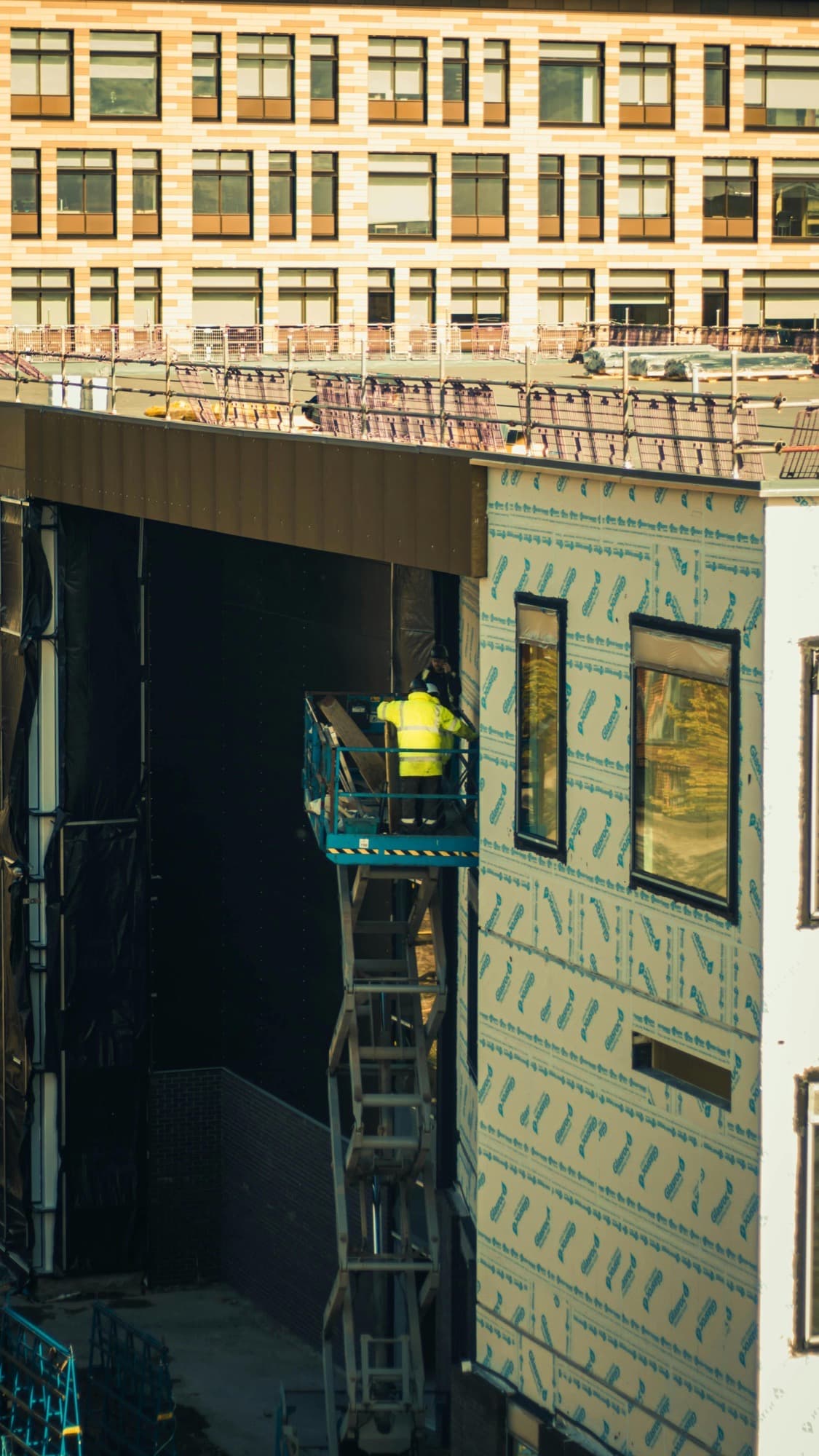
At Hattelle Homes we believe some of the strongest residential opportunities already exist. Redundant commercial property, tired high street buildings and offices that no longer suit modern working can often be transformed rather than replaced. Conversion keeps the embodied carbon in the existing structure, brings activity back into town centres and creates homes in places that already have transport, shops and services.
Class MA makes that route more accessible. It is not a shortcut to a good scheme, however. This guide explains how Class MA works, what the council will assess and what a conversion still needs beyond planning.
What is Class MA?
Class MA is set out in Schedule 2, Part 3 of the Town and Country Planning (General Permitted Development) (England) Order 2015. It allows a change of use from Class E to Class C3 dwellinghouses.
Class E covers a wide range of commercial uses, including:
- Shops and retail
- Financial and professional services
- Cafés and restaurants
- Offices
- Research and development and light industrial uses
- Indoor sport, fitness and recreation
- Medical and health services
- Creches, day nurseries and day centres
Class MA applies in England only. Wales, Scotland and Northern Ireland have their own planning systems.
What changed in March 2024?
From 5 March 2024, two important restrictions were removed:
- The vacancy requirement. The building no longer needs to have been vacant for three months before the application
- The floorspace limit. The previous cap of 1,500 square metres of floorspace changing use no longer applies
These changes opened Class MA to larger buildings and to buildings that are still partly occupied.
Which buildings qualify for Class MA?
The main qualifying test is the two year use rule. The building must have been in Class E use, or an earlier use class that is now part of Class E, for a continuous period of at least two years before the prior approval application is made.
Class MA is not available where the building is, or is within the curtilage of:
- A listed building
- A scheduled monument
It is also not available on land within:
- A Site of Special Scientific Interest
- An Area of Outstanding Natural Beauty, now known as a National Landscape
- A National Park or the Broads
- A World Heritage Site
- A safety hazard area or military explosives storage area
Conservation areas are not excluded, but an extra matter applies where the ground floor is changing use.
Local planning authorities can also remove Class MA rights in a defined area through an Article 4 direction. Many town and city centres have one. Checking for Article 4 directions is one of the first steps in assessing any site.
What does the council assess at prior approval?
Prior approval is not a full planning application. The council can only assess the matters listed in the legislation. For Class MA these are:
| Prior approval matter | What the council considers |
|---|---|
| Transport | The effect on transport, particularly the safe access to the site |
| Contamination | Risks from contamination on the site |
| Flooding | Flood risk on the site, with a site specific flood risk assessment in higher risk areas |
| Noise | The effect of noise from commercial premises on the intended occupiers |
| Industrial surroundings | The effect of industrial or other uses nearby on the intended occupiers |
| Natural light | Whether every habitable room will receive adequate natural light |
| Loss of services | In some cases, the effect of losing a registered nursery or health centre |
| Conservation areas | Where the ground floor changes use, the effect on the character or sustainability of the area |
| Fire safety | Where the building will contain two or more homes and is 18 metres or more in height or has seven or more storeys |
Transport
- What the council considers
- The effect on transport, particularly the safe access to the site
Contamination
- What the council considers
- Risks from contamination on the site
Flooding
- What the council considers
- Flood risk on the site, with a site specific flood risk assessment in higher risk areas
Noise
- What the council considers
- The effect of noise from commercial premises on the intended occupiers
Industrial surroundings
- What the council considers
- The effect of industrial or other uses nearby on the intended occupiers
Natural light
- What the council considers
- Whether every habitable room will receive adequate natural light
Loss of services
- What the council considers
- In some cases, the effect of losing a registered nursery or health centre
Conservation areas
- What the council considers
- Where the ground floor changes use, the effect on the character or sustainability of the area
Fire safety
- What the council considers
- Where the building will contain two or more homes and is 18 metres or more in height or has seven or more storeys
The council has 56 days from receiving a valid application to make its decision. That period can be extended by written agreement. Once prior approval is granted, the change of use must be completed within three years.
What standards must the homes meet?
Since April 2021, homes created through permitted development in England must meet the nationally described space standard. The minimum gross internal area for a one bedroom, one person home is 39 square metres, or 37 square metres where it has a shower room rather than a bathroom. Larger homes have higher minimums.
Natural light is assessed for every habitable room. That rules out deep plan layouts where bedrooms or living rooms rely on borrowed light. Office buildings with large floor plates often need careful internal planning to meet it.
What does Class MA not cover?
Class MA deals with the change of use. Several other consents and standards usually apply:
- External alterations. New windows, balconies, extensions and roof works are not covered by Class MA and usually need separate planning permission
- Building Regulations. Changing a building to homes is a material change of use under the Building Regulations 2010. The conversion must meet the relevant requirements, including fire safety, sound insulation, ventilation and energy efficiency
- Higher risk buildings. Where the converted building will be at least 18 metres or seven storeys high with at least two homes, building control approval comes from the Building Safety Regulator rather than the local authority
- Listed building and other consents. Where a building is listed, Class MA is not available and a full planning route is needed
Agricultural buildings have their own separate permitted development right under Class Q, with different rules.
What makes a good conversion?
Class MA can deliver very good homes or very poor ones. The legislation sets minimums. It does not set quality.
The conversions we look for share a few qualities:
- Buildings with good bones. A sound structure, reasonable floor to ceiling heights and a plan form that allows well lit homes
- The right setting. Somewhere people will want to live, with access to transport, green space and local services
- Homes planned around daylight. Layouts that put living spaces and bedrooms where the light is, rather than meeting the minimum
- Considered external works. New openings, entrances and amenity space designed as part of the building's character rather than added as an afterthought
- Lower impact choices. Retaining structure where possible, improving the fabric and choosing efficient heating and ventilation
Where Class MA does not suit a building, a full planning application for change of use can still be the better route. It allows external alterations and a wider design to be considered together.
Considering a commercial building for conversion?
Hattelle Homes works in partnership with Matthews & Roberts on selected residential opportunities, including the conversion of existing buildings into homes. From an initial conversation we can look at the planning route, the building's suitability and the practical path from opportunity to delivery.
We welcome introductions from property owners, agents and investors.
Frequently asked questions
What is Class MA permitted development?
Class MA is a permitted development right in England that allows buildings in Commercial, Business and Service use (Class E) to change to residential use (Class C3) without a full planning application. The developer must apply to the local planning authority for prior approval, which assesses a set list of matters such as transport, flooding, noise and natural light.
Is there still a vacancy requirement or size limit for Class MA?
No. From 5 March 2024 the requirement for the building to have been vacant for three months and the 1,500 square metre floorspace limit were both removed. The building must still have been in Class E use, or an earlier equivalent use, for a continuous period of at least two years before the prior approval application.
How long does the council have to decide a Class MA application?
The local planning authority has 56 days from receiving the application to determine prior approval. A longer period can be agreed in writing. Once prior approval is granted, the change of use must be completed within three years.
Do Class MA homes have to meet space standards?
Yes. Since April 2021, homes created through permitted development in England must meet the nationally described space standard. Every habitable room must also receive adequate natural light, which is one of the matters assessed at prior approval.
Does Class MA cover external changes to the building?
No. Class MA covers the change of use only. New windows, extensions, roof alterations and other external works usually need a separate planning permission unless another permitted development right applies. Many conversions therefore combine a Class MA prior approval with a planning application for the external works.
Have land or a building with residential potential?