Highways & Road Networks
Safer roads, delivered in live traffic
Independent construction consultancy for highway improvement, Section 278 and 38 works, and Strategic Road Network schemes. One of construction’s most safety-critical environments — managed with zero tolerance for error.
The highways brief
The site is open to the public at 70mph
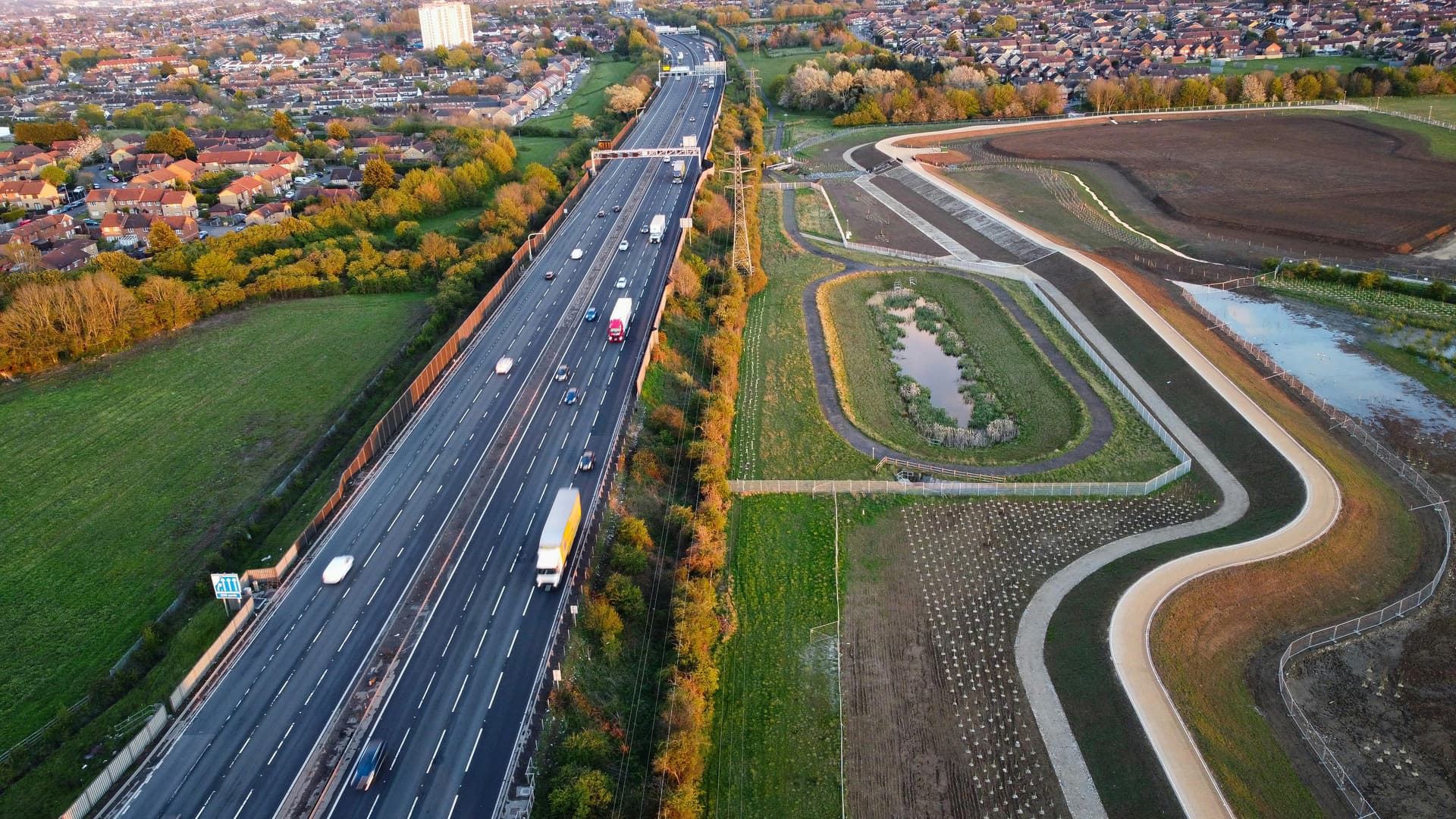
Highway construction has no fence between the works and the public. Traffic runs alongside the workforce, often at speed, often at night. That single condition makes traffic management design, sequencing, and CDM the difference between a safe scheme and a serious incident — long before anyone talks about programme.
We act for highway authorities, developers, and contractors as an independent client-side consultancy. We coordinate technical approval, statutory undertaker diversions, and road safety audits; we design the phasing that keeps traffic moving; and we hold the CDM and temporary works governance that keeps everyone — workforce and public — safe from mobilisation to adoption.
Where we add value
- Live-traffic safety
- TM design and sequencing that protect workforce and public alike.
- Approvals navigation
- S278/S38 technical approval, bonding, and adoption handled end to end.
- Diversion coordination
- Statutory undertaker diversions kept off the critical path.
- Audit governance
- All four road safety audit stages procured and coordinated.
Capabilities
From local junctions to the Strategic Road Network
Junction & network improvement
Signalised junctions, roundabout upgrades, and capacity schemes on live networks — delivered through phased traffic management with zero tolerance for error.
Section 278 & Section 38
Developer highway works and new adoptable roads — technical approval, bonding, and the adoption process managed end to end with the highway authority.
Structures & bridge works
Bridge construction, refurbishment, and temporary structures near live carriageways, with specialist temporary works coordination under BS 5975.
Strategic Road Network
Schemes on and adjacent to the SRN — PCF stage gates, DMRB standards, and Managing Agent coordination for National Highways works.
Track record
Delivered safely, in live conditions
A dual-carriageway junction improvement delivered through three phases on a road carrying 35,000 vehicles a day — no reportable incidents, no unplanned lane closures.
A Section 278 signalised junction with pedestrian crossings and three statutory undertaker diversions — delivered ahead of the planning-condition deadline.
Every scheme run through all four road safety audit stages, from preliminary design to post-opening monitoring.
How we deliver
An integrated consultancy for highway delivery
Each discipline stands alone or combines into a single accountable team. Explore the services behind our highways work.
In our clients’ words
“Their TM coordination and CDM management ensured a complex junction improvement progressed safely through three phases without any reportable incidents or unplanned lane closures — on a dual carriageway carrying 35,000 vehicles per day.”
“Our Section 278 works involved a new signalised junction, pedestrian crossings, and utility diversions across a busy A-road. They coordinated the technical approval process, managed three statutory undertaker diversions, and delivered ahead of the planning-condition deadline.”
Highways questions
What clients ask us about highway schemes
A Section 278 agreement under the Highways Act 1980 enables a developer to fund improvements to an existing public highway. Typically required as a planning condition, S278 works include junction improvements, new access points, pedestrian crossings, and carriageway widening. The works must be designed to adoptable standards, technically approved by the highway authority, and constructed under their supervision. A bond or surety is required before works commence, and commuted sums for future maintenance are payable.
Highway construction carries specific CDM risks including working in live high-speed traffic, complex temporary traffic management, night working with reduced visibility, deep excavations near live services, and public pedestrian and cyclist interfaces. Our Principal Designers address these sector-specific hazards in pre-construction information and ensure risks are managed through robust traffic management design, safe systems of work, and appropriate sequencing.
Section 38 applies to the construction of new roads that will be adopted as public highway — typically estate roads within development sites. Section 278 applies to works on existing public highways — typically junction improvements and access works required as planning conditions. Both require technical approval and bonding, but S38 also includes a formal adoption process with a 12-month maintenance period and testing regime before the road becomes publicly maintainable.
We coordinate the traffic management process including TM design brief, Chapter 8 compliance review, highway authority approval, and implementation coordination. For National Highways works, this includes the formal TM approval process through the Managing Agent. We also manage TTRO applications for road closures and coordinate through permit schemes under TMA 2004.
Yes. Utility diversions are frequently on the critical path for highway schemes. We manage the process from C3/C4 budget estimates through detailed design coordination, programme integration, and construction supervision. We coordinate between multiple utility companies and ensure diversionary works are completed before main highway construction begins.
We coordinate all four stages of road safety audit: Stage 1 (preliminary design), Stage 2 (detailed design), Stage 3 (post-construction), and Stage 4 (post-opening monitoring). We procure independent audit teams, manage the interface between auditor and designer, coordinate designer responses, and ensure the highway authority approves any departures or exceptions.
Yes. We provide project management and CDM advisory for schemes on or adjacent to the Strategic Road Network. Our team understands the PCF stage gate process, DMRB design standards, National Highways safety requirements, and the Managing Agent coordination process. We also manage Section 278 works on trunk roads which require National Highways approval.
Highway construction involves specialist temporary works including excavation support near live carriageways, temporary bridges and traffic decks, crane operations adjacent to live roads, temporary retaining structures, and drainage attenuation during construction. We provide temporary works coordination ensuring BS 5975 compliance within the highway environment and compliance with SHEW (Safety at Street Works) requirements.
Night working is standard practice on busy roads where daytime lane closures would cause unacceptable congestion. We manage night working programmes including fatigue management, lighting requirements, noise mitigation for nearby residents, TM installation and removal sequencing, and productivity planning to maximise output during restricted working windows.
Commuted sums are upfront payments made by developers to the highway authority to cover the future maintenance costs of non-standard highway features — enhanced paving, decorative lighting, landscaping, SUDS features, or structures. The sums are calculated based on the anticipated maintenance liability over a defined period (typically 20-60 years) and must be paid before the highway authority will adopt the works.
Start a conversation
Planning a highway scheme?
Whether it is a Section 278 junction, a network improvement, or works on the Strategic Road Network, we will tell you plainly what it takes to deliver it safely and on programme. Speak to our highways team.
Client Portal
The Client Portal provides secure access to project documents, progress updates, and direct communication with your Matthews & Roberts team.
Request access: info@matthewsroberts.com
Portal access is provided to approved clients. Contact us if you need support.
Existing client?
Access your project portal to view documents and track progress.
New enquiry?
Tell us about your project and we'll respond within 24 hours.