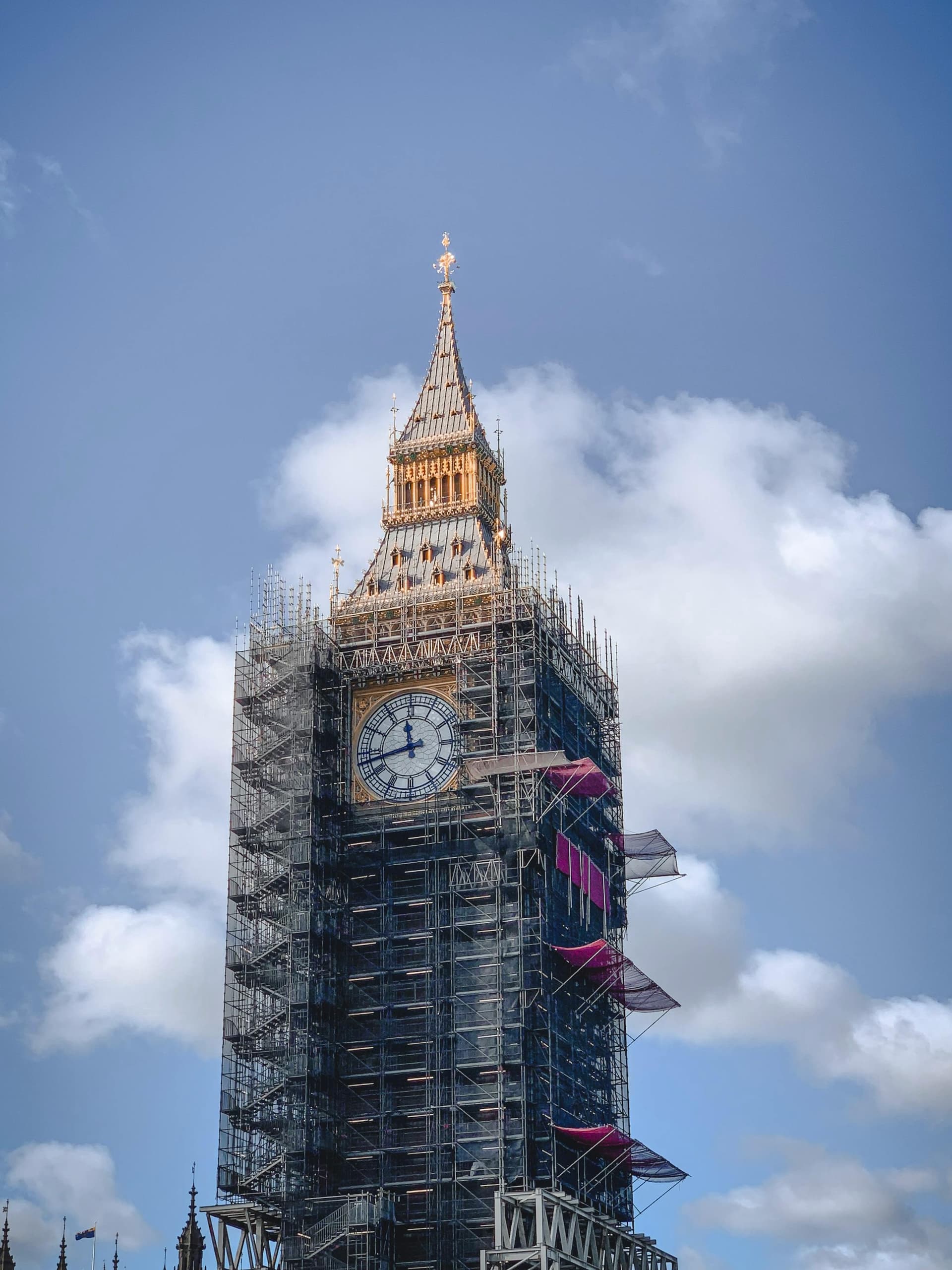
Heritage & Conservation
Protecting Britain’s built heritage
Independent construction consultancy for listed buildings and conservation areas. We navigate consent, coordinate specialist trades, and protect historic fabric — combining conservation principles with the delivery discipline your programme needs.
The heritage brief
You cannot un-demolish history
Heritage fabric is finite. A modern building can be corrected; a lost medieval truss or a stripped Georgian cornice is gone for good. That reality changes the whole approach — the discipline is not speed but judgement, applied by people who understand both conservation principle and construction delivery.
We act for private estates, developers, institutions, and public bodies as an independent client-side consultancy. We hold the consent regimes together — Listed Building Consent, conservation-area controls, Building Regulations — procure genuinely competent specialist trades, and keep significance at the centre of every decision, from first survey to final record.
Where we add value
- Consent navigation
- LBC, conservation-area, and Building Regulations regimes coordinated as one.
- Genuine specialists
- Conservation-accredited trades sourced and competence-verified, not assumed.
- Fabric-first CDM
- Risk managed through method and protection, not by stripping historic fabric.
- Significance protected
- BS 7913-aligned decisions, recorded before, during, and after works.
Conservation principles
The principles that govern every decision
Heritage construction is doctrine before technique. These are the principles we hold to on every listed and conservation-area project.
Minimum intervention
Do only as much as necessary. Repair rather than replace, and retain as much historic fabric as possible to preserve authenticity and evidential value.
Reversibility
Where alteration is justified, prefer interventions that can be reversed without damage to historic fabric, leaving options open for future generations.
Like-for-like materials
Traditional materials and techniques matching the original — lime mortars not cement, appropriate timber species, compatible stone, historically accurate finishes.
Honest repair
New work should be distinguishable from original fabric on close inspection while remaining visually sympathetic, avoiding pastiche that confuses the historical narrative.
Understand significance
Every intervention is informed by thorough understanding of the building's heritage significance — its aesthetic, evidential, historical, and communal values.
Record and document
Comprehensive photographic and written records before, during, and after works, preserving the irreplaceable evidence heritage construction creates.
Track record
Significance protected, programmes kept
A conversion navigating Listed Building Consent, conservation-area restrictions, and Building Regulations at once — full LBC granted with zero conditions outstanding.
Medieval timber framing discovered behind Victorian plaster — our heritage discovery protocol recorded and preserved it while recovering the programme in three weeks.
Every project delivered against the British Standard for the conservation of historic buildings, protecting significance at each intervention.
How we deliver
An integrated consultancy for heritage delivery
Each discipline stands alone or combines into a single accountable team. Explore the services behind our heritage work.
In our clients’ words
“Our Grade II* conversion required navigating Listed Building Consent, conservation-area restrictions, and Building Regulations simultaneously. They coordinated all three consent regimes while keeping the programme on track. The conservation officer commended our heritage impact assessment.”
“We discovered medieval timber framing behind Victorian plaster during opening-up works. They immediately implemented their heritage discovery protocol, coordinated with Historic England, and restructured the programme to accommodate proper recording and preservation.”
Heritage questions
What clients ask us about heritage projects
Yes. Unlike standard planning permission, Listed Building Consent covers all works affecting the character of a listed building — internal and external. There is a common misconception that Grade II listing only protects the exterior; this is incorrect. All features are protected regardless of whether they are specifically mentioned in the listing description. Removing a Victorian fireplace, altering original joinery, or changing internal layout all require consent.
A conservation area protects the character and appearance of an area as a whole — its streetscape, materials, scale, and spatial qualities. A listed building protects a specific structure. Conservation areas restrict permitted development rights and require permission for demolition and certain external changes; listed buildings require Listed Building Consent for any alteration affecting their character. Properties that are both face dual consent requirements.
Yes, with appropriate consents and design sensitivity. Historic England guidance encourages high-quality contemporary additions that are clearly of their time rather than pastiche reproductions. The key test is whether the addition preserves or enhances the significance of the heritage asset. Successful additions typically respect the scale, massing, and materials palette of the existing building while being honestly contemporary.
CDM 2015 applies equally, but the risk profile differs. Standard CDM practice emphasises risk elimination through design change — yet heritage buildings constrain design freedom because historic fabric must be preserved. Our Principal Designers develop CDM strategies that address construction risks through methodology and protection rather than fabric removal, using conservation-appropriate scaffolding, vibration controls, and specialist temporary works.
Discovery of unexpected historic fabric triggers a formal process. Work must stop in the affected area immediately, the discovery must be assessed by a heritage professional, and the local authority conservation officer — and potentially Historic England — notified. We maintain heritage discovery protocols on all projects, including pre-agreed notification procedures and programme contingencies, so unexpected finds are managed professionally.
Heritage construction requires demonstrably competent specialists — not just general contractors. Key trades include traditional lime workers, specialist joiners familiar with historic profiles, stone masons who can match existing masonry, heritage roofers experienced with lead, slate, or appropriate tile, and conservation-trained decorators. Using inappropriate contractors or materials is the single biggest cause of heritage enforcement action.
A Heritage Impact Assessment evaluates how proposed works will affect the significance of a heritage asset. It is required for any Listed Building Consent or planning application affecting a designated heritage asset. The HIA should describe the asset's significance, identify how proposals affect it, and justify any harm through demonstrable public benefit. Its quality directly influences the conservation officer's recommendation.
Yes, but it requires specialist knowledge. Standard measures — external wall insulation, replacement double glazing, cavity wall insulation — can cause serious damage through moisture trapping and loss of historic fabric. Heritage-appropriate approaches include secondary glazing, internal insulation with breathable materials, draught-proofing original windows, and appropriate heating upgrades. Historic England publishes detailed guidance on this.
The statutory determination period is 8 weeks (13 weeks for major applications). Heritage applications frequently take longer due to Historic England consultation for Grade I and II* buildings. Pre-application discussions add 4-8 weeks but significantly improve approval chances. For complex schemes, allow 4-6 months from first pre-application meeting to formal consent. We manage the entire consent timeline.
Several sources exist: the National Lottery Heritage Fund (grants from £10,000 to £5M+), Historic England repair grants for Heritage at Risk properties, listed building VAT zero-rating for qualifying alterations, and Section 106/CIL heritage allocations. Eligibility depends on your building's designation, condition, and the nature of proposed works. We advise on funding strategies and can coordinate grant applications alongside delivery.
Start a conversation
Planning work to a heritage building?
Whether it is a listed building conversion, conservation-area scheme, or a sensitive repair to a building at risk, we will tell you plainly what it takes to deliver it well and lawfully. Speak to our heritage team.
Client Portal
The Client Portal provides secure access to project documents, progress updates, and direct communication with your Matthews & Roberts team.
Request access: info@matthewsroberts.com
Portal access is provided to approved clients. Contact us if you need support.
Existing client?
Access your project portal to view documents and track progress.
New enquiry?
Tell us about your project and we'll respond within 24 hours.